Secure What Ships: Firmware Security and SBOM Intelligence
Gain visibility into software components embedded in firmware and binaries, understand product exposure, and build stronger security evidence across connected-device and automotive supply chains.
Meteonic helps enterprises evaluate Finite State for firmware-grounded software bills of materials (SBOMs), vulnerability prioritization, supplier assurance and product security workflows.
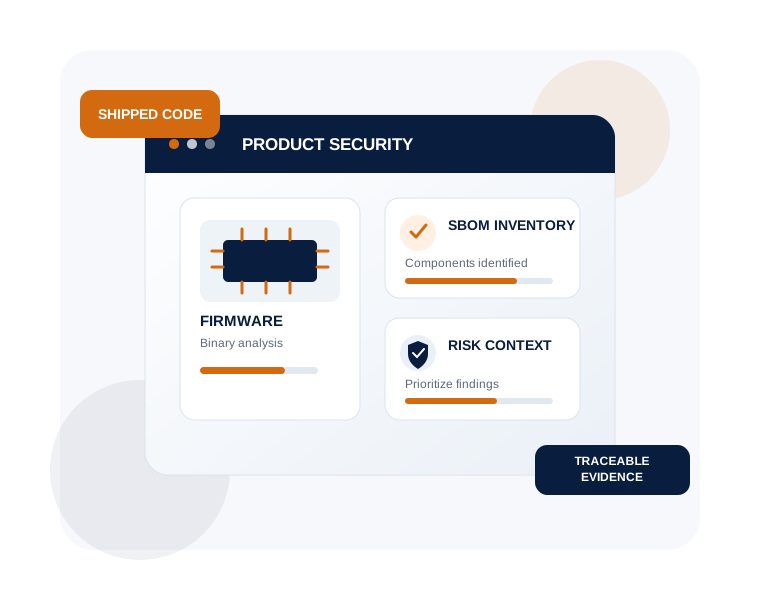
What Is Firmware Security and SBOM Analysis?
Firmware security analysis examines software embedded in connected devices, products and systems to identify components, known vulnerabilities and potential weaknesses. A software bill of materials (SBOM) records the software components in a product. Finite State analyzes firmware, binaries, source code and supplier SBOMs to help organizations understand what is present in shipped software, assess risk in context and maintain traceable product-security evidence.
Close the Gaps in Connected Product Security
Supplier documents and isolated scanner reports may not fully describe the components inside a delivered firmware build. Build security decisions around evidence from the product itself.
Firmware-Grounded SBOMs
Analyze firmware and binary artifacts to identify embedded components, including dependencies that may be absent from supplier-provided manifests.
Software Supply-Chain Assurance
Bring supplier SBOMs and supported third-party scan results into a broader view of product and portfolio risk.
Exploitability-Based Prioritization
Use reachability, vulnerability context and product information to help teams distinguish actionable exposure from findings that require further validation.
Traceable Compliance Evidence
Organize security records and evidence that can support workflows aligned to ISO/SAE 21434, UNECE WP.29 and internal product-security requirements.
Release-to-Release Visibility
Track software composition and vulnerability changes across firmware versions, product variants and updates.
Connected Product Risk View
Connect artifacts, findings and supporting records to help product security, engineering and compliance teams make informed release decisions.
Support Security Across Automotive Software Supply Chains
Modern vehicles depend on software distributed across electronic control units (ECUs), suppliers and product variants. OEMs and Tier 1 suppliers need a reliable way to understand what software is included in each delivered build and how newly disclosed vulnerabilities affect it.
Finite State can help teams consolidate software inventory, analyze firmware artifacts and maintain risk context as products evolve. These capabilities can support evidence preparation for automotive cybersecurity processes, including ISO/SAE 21434 and UNECE WP.29-related requirements; they do not replace a formal compliance assessment.
Discuss Automotive SecurityUse cases for OEMs and Tier 1 suppliers
- Verify components found in delivered firmware
- Compare supplier SBOMs with analyzed artifacts
- Assess CVE impact across ECU and product variants
- Maintain security evidence across releases and updates
- Support product cybersecurity and audit workflows
From Firmware Artifact to Actionable Security Evidence
A practical workflow connects software inventory, risk analysis and defensible decisions.
Analyze
Assess firmware, binaries, source code and available supplier records.
Inventory
Create and consolidate SBOM and component information for product builds.
Prioritize
Correlate vulnerability information with product and exploitability context.
Prove & Monitor
Keep records and release evidence aligned as software and risk change.
Product Security Capabilities to Evaluate
Assess coverage against your product architecture, development process and regulatory needs.
Firmware Security and SBOM Solutions for Indian Enterprises
For Indian automotive manufacturers, Tier 1 suppliers, industrial technology providers and connected-device OEMs, product security must span multiple suppliers, firmware versions and long-lived products. Finite State can help create a more consistent view of software composition and vulnerability risk across those environments.
Meteonic can help your team evaluate the platform against your firmware formats, product portfolio, supplier processes and evidence requirements.
Plan your evaluation
- Identify key products, firmware builds and target architectures
- Review current SBOM sources and scanner outputs
- Define vulnerability triage and release-evidence workflows
- Map requirements to automotive or connected-device programs
- Confirm integrations, deployment and reporting needs
Frequently Asked Questions
Answers to common questions about firmware analysis, SBOM management and product security.
What is a firmware SBOM?
A firmware SBOM is an inventory of software components identified within a firmware build. It helps teams understand component presence and assess known vulnerability exposure in the shipped product.
How is binary analysis different from a supplier SBOM?
A supplier SBOM is a software-component record supplied by a vendor. Binary analysis examines the actual compiled artifact to identify components present in that artifact, which can help reveal gaps between documentation and shipped software.
What is product security?
Product security is the practice of identifying, managing and reducing security risks in software-enabled products throughout design, development, release and maintenance.
How can exploitability-based prioritization help?
It adds context such as reachability and product details to vulnerability findings, helping teams investigate and prioritize issues based on potential relevance rather than severity alone.
Can Finite State support automotive cybersecurity workflows?
Finite State capabilities can support software inventory, vulnerability analysis and traceable evidence workflows relevant to automotive product security. Organizations should map platform outputs to their own ISO/SAE 21434 and UNECE WP.29 processes.
Does an SBOM alone guarantee compliance?
No. An SBOM is one input to a broader security and compliance process. Organizations also need appropriate risk assessment, vulnerability handling, verification, governance and evidence for applicable requirements.
Can product security be monitored after release?
Continuous product-security processes track changes in software components and vulnerability information so teams can assess newly disclosed issues against relevant product versions.
How can Meteonic help evaluate Finite State?
Meteonic can discuss your firmware and product-security requirements, help scope a platform evaluation and coordinate a demo around your environment and use cases.
Know What Ships. Understand What Matters.
Talk to Meteonic about firmware-grounded SBOMs, connected product security and software supply-chain risk visibility with Finite State.
Request a DemoSchedule a Consultation